
Cut Where It Matters: Our Approach to Field Management
If you’ve visited our plant centre recently, you might have noticed that we don’t keep every inch of the front field neatly cut.
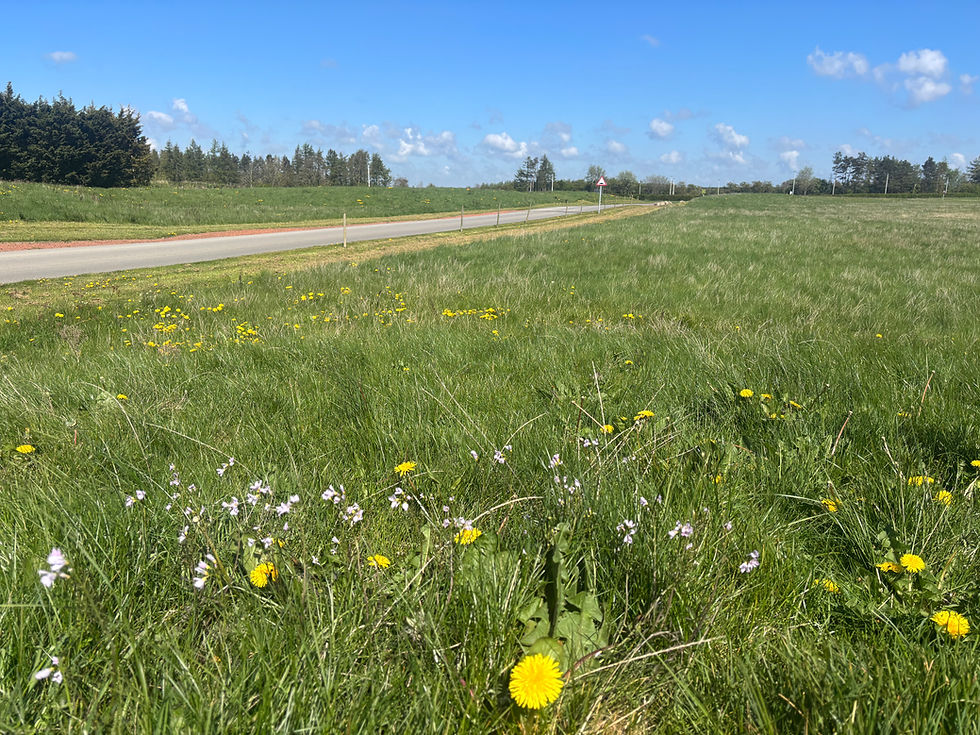
In fact, aside from the edges near the entrance and along the in-road, we leave the majority of it to grow naturally.
That’s not an oversight. It’s a conscious decision.
We’re now in the second year of our front field re-wilding initiative, and this spring, we can already see it starting to pay off.
Leaving Space for Nature
Those of you who visit us regularly in Eaglescliffe will be familiar with the open green space that greets you on your way in.
For years, this field was maintained in the traditional way; cut regularly, kept short, and managed for neatness above all else.
Two years ago, we took a different approach.
By allowing the field to grow naturally, particularly in early spring, we’re creating a valuable food source for pollinators at a time when it’s in short supply.
Plants like dandelions, often dismissed as weeds, are actually one of the first and most important sources of nectar for bees emerging after winter.
Cut everything back too early, and that food source disappears.
What We’ve Noticed Over Time
We’ve been managing the field this way for over a year now, and the difference is noticeable.
There’s been a clear increase in bee and butterfly activity across the site, along with more general wildlife. We’ve seen more bird activity too, with pheasants and even hares using the longer grass for cover.
It’s a simple change, but it’s one that’s had a visible impact.
Cut Where it Matters
The areas we do maintain closely are the ones that affect safety and visibility.
Clear sight-lines for vehicles entering and leaving the site are essential, so those edges are kept trimmed and tidy. It’s about making sure the space works as it should for customers, deliveries, and day-to-day operations.
Not Neglected: Managed
There’s often a perception that longer grass means a space hasn’t been looked after.
In reality, it’s the opposite.
This is about balance: maintaining the areas that need structure and control, while allowing other areas to serve a different purpose.
A Different Way of Thinking About Outdoor Spaces
This approach isn’t just something we apply here, it reflects how we think about gardens more broadly.
Not every space needs to be cut back to within an inch of its life to look good or function well. With the right balance, you can create a space that feels considered, looks beautiful, and supports the environment at the same time.
With gardening trends like Cottagecore continuing to grow into 2026 (as highlighted in our recent Telegraph feature) there’s a clear shift towards softer, more naturalistic planting styles.
“Cottagecore is a clear response to years of minimalism and stripped-back outdoor spaces. People are moving away from cold, clinical designs to create softer, more welcoming gardens.”
— Simon Wilkinson, Director
But importantly, this isn’t about letting things run wild without thought. The most successful “wild” spaces are still carefully considered, they just feel more relaxed, more natural, and more in tune with their surroundings.
A Small Change, a Meaningful Difference
What we’ve done here is simple.
We’ve cut where safety requires it, and left the rest to do what nature intended.
It’s not about neglect, and it’s not about following a trend. It’s about understanding how a space can work better, not just for people, but for everything that depends on it.
And when you start to see more bees in the spring, more movement in the grass, and wildlife returning to areas that were once just “kept tidy”… you realise that sometimes, doing less is actually doing more.


Comments